
Key Takeaways: At a Glance
- BC PST is 7 percent, administered by the BC Ministry of Finance, separate from GST/HST.
- Contractors who install materials into real property generally pay PST when they buy those materials. They do not usually charge it again to the customer.
- Trucking fleets registered as multijurisdictional vehicles (MJVs) can buy trailers, and the parts needed to run them, exempt from PST under Bulletin PST 135.
- Getting this backwards runs both ways: contractors who wrongly add PST to a client invoice, and truck owners who pay PST on a purchase that actually qualified for exemption.
British Columbia’s provincial sales tax is 7 percent, and most business owners assume it works the same way everywhere it applies. It does not. Whether you pay it, charge it, or qualify for an exemption depends on what your business actually does with the goods, not just what industry you are in.
Two of our most common client groups, contractors working on real property and trucking or logistics operators, land on opposite sides of this rule more often than either expects.
If You Are a Contractor Working on Real Property
When your work involves supplying and installing goods that become part of a building, structure, or other real property, whether that is framing lumber, drywall, plumbing fixtures, or built-in equipment, the general BC rule treats you as the end consumer of those materials.
That means you pay PST when you purchase them, the same as any other buyer. You do not typically charge PST again to your customer as a separate amount on a real property contract. The PST cost is already built into what you paid for the materials, and from there into your price.
Exceptions Worth Knowing
- PST-exempt customers: Contracts with a customer who is themselves PST-exempt (certain First Nations contracts, for example) can qualify you for a refund on the PST you paid on materials used in that job.
- Goods for resale: Goods you purchase solely for resale, without installing them yourself, are a different situation. There you act as a retailer and generally do charge PST to the customer.
- Goods shipped into BC: Materials shipped into BC from outside the province, where PST was not collected at the point of purchase, usually need to be self-assessed and remitted directly.
Common mistake: Treating a lump-sum renovation or build contract like GST/HST, where the tax is visibly added at the end. PST on a real property contract does not usually work that way. If you are adding a separate PST line to a client’s invoice for a straightforward install job, check whether that is actually correct for your situation.
If You Run Trucks Across More Than One Province
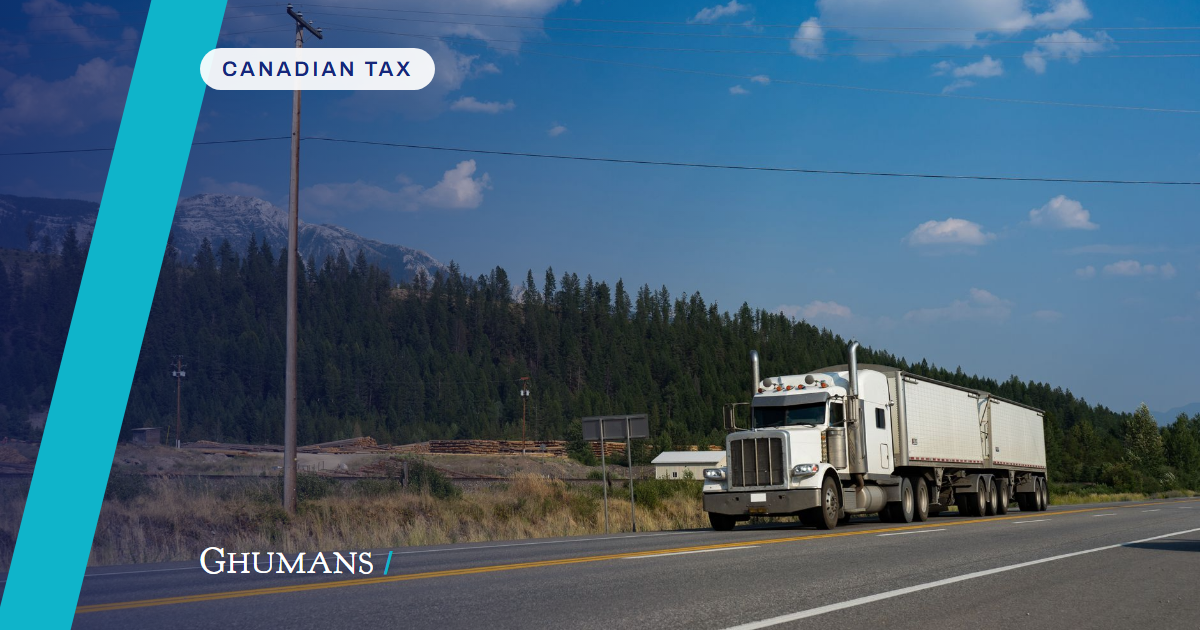
A separate BC PST rule applies to commercial vehicles registered under the International Registration Plan as multijurisdictional vehicles (MJVs), meaning a truck or tractor that regularly operates in more than one province or state rather than staying inside BC.
Under Bulletin PST 135, a trailer obtained for use solely with a fleet of registered MJVs is exempt from PST entirely. Parts that are affixed to, and necessary for the operation of, an MJV or its trailer carry the same exemption.
Keep it separate: This is a vehicle-and-parts exemption specifically. It does not extend to fuel tax reporting under IFTA, which is a completely separate system with its own filing requirements. Qualifying for the MJV exemption on a trailer purchase does not change anything about how your fuel tax return works.
Quick Reference: PST Treatment by Situation
| Situation | PST Treatment |
|---|---|
| Materials you supply and install into a real property job | You pay PST when you purchase them. You generally do not charge it again to the customer. |
| Trailer or part used solely with a registered multijurisdictional vehicle | Can qualify for a full PST exemption under Bulletin PST 135. |
| Goods purchased for resale without installation | You charge PST to the customer as a retailer. |
Where This Actually Gets Caught
PST reviews tend to focus on exactly these two points: contractor invoices that charge PST where they should not (or miss self-assessing where they should), and vehicle or trailer purchases claimed as exempt without the IRP registration paperwork to back it up.
The fix in both cases is the same: document the exemption or the correct treatment at the time of purchase, not after the fact when a review letter arrives.
Frequently Asked Questions
Do I charge my customer PST on a renovation job?
Generally no. You pay PST on the materials when you buy them, and that cost is already built into your price to the client.
Is my work truck PST-exempt if I only drive within BC?
No. The MJV exemption is specifically for vehicles and trailers used in a fleet registered under the International Registration Plan for multi-jurisdiction operation. A BC-only truck does not qualify.
What if I already paid PST on a trailer that should have qualified for the exemption?
There is a refund process for eligible MJV-related purchases. Keep your IRP registration and purchase invoices, and check with us before assuming it is too late to claim it.
Does any of this affect GST/HST?
No. GST/HST is a federal tax with its own input tax credit rules and runs entirely separately from BC’s provincial sales tax.
Talk to Us Before Your Next Purchase
General information only. PST treatment depends on the specifics of each contract and each vehicle registration, so talk to us before your next materials order or truck purchase if you are not sure which side of this your business falls on.
Related reading: our trucking and logistics accounting page covers CCA, IFTA, and entity structure together. If you are an owner-operator invoicing a single carrier, also see are incorporated truck drivers considered small businesses in Canada. Businesses adding crew or drivers to payroll can find the compliance basics on our payroll services page, and our financial accounting services page covers how this fits into your books overall.
Sources: PST for real property contractors, Province of British Columbia; Bulletin PST 135, Multijurisdictional Vehicles, BC Ministry of Finance.
B.C. had planned a second PST question for contractors from October 1, 2026, on the other side of the invoice: 7% PST on accounting services, including the bookkeeping and year end you pay for. The province paused it on September 18, 2026, so it does not start on October 1.